Your cart is empty.

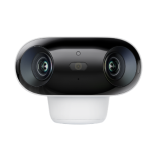
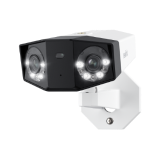
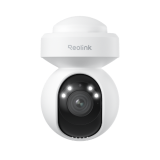
A 24/7 continuous recording security camera is a surveillance device engineered to record nonstop video footage day and night. At Reolink Canada, our 24/7 recording cameras support continuous local storage via high-capacity microSD cards, Reolink Home Hubs, or multi-channel NVR systems. Whether you need a hardwired PoE setup for 24-hour perimeter coverage or a plug-in Wi-Fi camera for home monitoring, you can enjoy uninterrupted video surveillance at resolutions up to 18MP with zero monthly subscription fees with Reolink!
No Product Found
Unlike standard battery cameras that "sleep" and only wake up when motion is detected (frequently missing the first crucial seconds of an incident), Reolink hardwired PoE and plug-in 24/7 security cameras capture every second of activity continuously and uninterrupted.
No more paying expensive monthly cloud bills for 24/7 security camera storage! Choose standalone microSD card recording for scheduled time-lapses, an indoor Reolink Home Hub, or a multi-channel NVR with pre-installed 2TB to 4TB hard drives (with select models expandable up to 48TB) to store weeks of continuous uncompressed 4K footage locally.
Reviewing 24 hours of continuous footage doesn't mean wasting time scrubbing through endless video. Reolink 24/7 recording cameras index smart person, vehicle, and pet detection metadata directly onto the local recording timeline, allowing you to filter and jump straight to motion events on your phone or desktop app
Avoid paying monthly per-camera cloud fees just to store continuous video feeds. Reolink continuous recording systems deliver 24-hour video protection, multi-channel remote live viewing, and instant app alerts with 100% subscription-free local data ownership.
Continuous recording in security cameras refers to the process of capturing footage nonstop, 24/7, without interruptions. This ensures that every moment is documented. However, cameras that record 24/7 require larger storage capacity to accommodate the constant stream of video data.
Wired Continuous Recording Camera: Wired 24-hour recording cameras get continuous power through wires to perform continuously. They are usually PoE cameras or DC-powered cameras. PoE cameras use an Ethernet cable for power and networking. In contrast, DC-powered cameras use an adapter connected to an AC outlet for continuous power. They require a Wi-Fi or ethernet connection for networking.
Wireless Continuous Recording Camera: Wireless continuous recording cameras are completely wireless. They have a built-in battery for power and are often connected to solar panels for automatic recharging. They use Wi-Fi or 4G to access the internet.
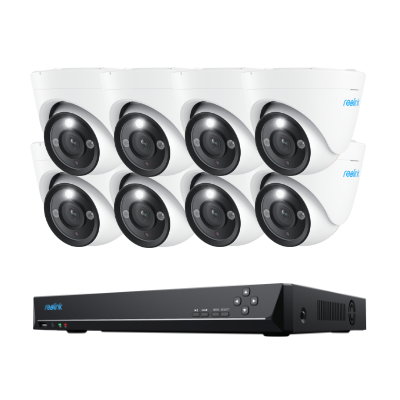
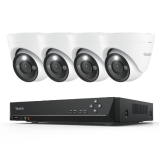
Camera System for 24/7 Recording: A continuous recording system consists of multiple security cameras and a central unit like NVR. The cameras could be connected to the NVR through an Ethernet cable or Wi-Fi. The recordings of the cameras are stored in the built-in NVR storage, which is more than enough to store recordings for several days.
Option 1: Set the camera to continuous recording mode.
Option 2: Set up scheduled recording for the whole day.
Option 3: Connect the camera to a reliable cloud storage for continuous recording.
Option 4: Set up local storage, such as a microSD card or NVR/DVR.
Option 5: Connect the camera to an FTP server to record 24/7.
Select any suitable option according to the compatibility of your security camera, budget, and personal preferences.
True 24-hour Recording: Make sure the camera records continuously all day (24 hours) without any interruption. Some cameras do not have this feature, and they work in motion detection mode. You need to ensure the camera has this recording mode and is capable of recording straight for 24 hours.
Reliable Power Source: For continuous recording, the camera's power source must be reliable. If it is a wired camera, you don't need to worry about it. But if it's a battery-powered camera, make sure it has enough capacity to last longer on continuous recording and is also compatible with solar panels.
Sufficient Storage Capacity: If you want to store the recordings for the whole day, it is a must to have sufficient storage. Otherwise, the camera will delete old recordings automatically. The storage should have enough capacity to save a recording of at least a week.
Without Subscription: The camera should work without any subscription or recurring charges. It must offer all features without any charges or conditions. It will save you from recurring fees.
Remote Access: The camera should allow users to access the life feed, camera recordings, and other controls from any location. It should have a smartphone app to offer remote access to the connected devices.
Smart Detection: With smart detection, the camera detects objects and distinguishes between persons, pets, and vehicles. It sends real-time alerts with details and eliminates false alerts.
- Records every moment and provides details of every incident.
- It offers seamless videos without any gaps or delays and doesn't miss any crucial moments.
- Gives peace of mind to users through optimal coverage and security.
- It's a simple yet reliable option without any complexity like motion detection.
- Deters criminal activities and unwanted behaviors as it captures videos all the time.
Yes, security cameras can be set to record all the time, but 24/7 recording requires substantial storage space. Many modern cameras utilize motion detection and record only when movement is detected. In addition to these options, some devices also offer scheduled recording or event-based recording.
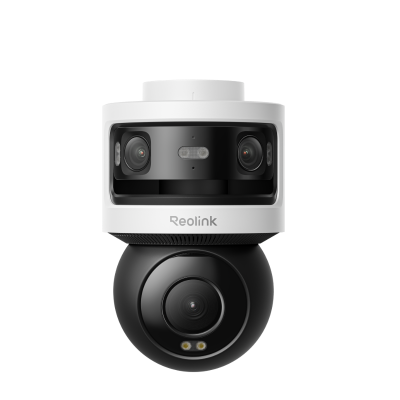
There are many security cameras on the market that can record for 24 hours. They capture continuous footage and ensure enhanced home security. Check out Reolink Atlas PT Ultra as one of the best continuous security cameras. With its 20000mAh battery, it offers continuous video recording for 12 hours per day for one week (8 days) with only one single charge.
Yes, some Reolink cameras can record continuously. Most are NVR systems and cameras. If you want your Reolink device to record 24/7 continuously, you can enable camera recording and set up a timer recording schedule for it via the Reolink app, client, or web browser.
Storage requirements for 24/7 continuous recording depend on video resolution (e.g., 4K 8MP vs. 2K 5MP) and frame rate:
4K UHD (8MP) Camera: Requires approximately 80 GB to 100 GB per day of continuous 24-hour recording. A 256GB microSD card holds about 2.5 to 3 days of nonstop single-camera footage.
Multi-Camera NVR Storage: A 4-camera 4K system continuous recording uses approximately 350 GB to 400 GB per day. A pre-installed 2TB hard drive provides roughly 5 to 6 days of 24/7 recording across all 4 cameras simultaneously, while a 4TB or 8TB hard drive extends local storage to several weeks.
Hybrid Storage Tip: You can configure cameras to record continuous 24/7 footage to a central NVR security system while saving motion-only AI clips to an internal microSD card for fast backup.
Most standard battery and solar cameras operate in power-saving mode and only record when motion is detected to conserve battery life. However, if you require wireless setup flexibility with continuous recording:
Plug-in Wi-Fi Cameras: Plug-in Wi-Fi cameras transmit video wirelessly over your home network while plugging into an electrical wall outlet, providing true 24/7 continuous recording without battery drain.
Extended Battery Recording Models: Ultra-high-capacity battery cameras (such as the Reolink Altas PT Ultra with a 20,000mAh battery) support extended daily recording schedules—delivering up to 12 hours of continuous recording per day for 8 consecutive days on a single charge.
Hardwired PoE Cameras: For permanent, year-round continuous recording, hardwired PoE IP cameras connected to an NVR remain the gold standard for network stability and power reliability.


Be Prepared, Be Ahead
Never miss Reolink hot deals, news, and updates tailored for you.
Be Prepared, Be Ahead
Never miss Reolink hot deals, news, and updates tailored for you.

Google, Google Play, Google Assistant and related marks and logos are trademarks of Google LLC. Amazon, Alexa and all related logos are trademarks of Amazon.com, Inc. or its affiliates. Mac and Safari are trademarks of Apple Inc. App Store is a service mark of Apple Inc., registered in the U.S. and other countries. Firefox and the Firefox logo are trademarks of the Mozilla Foundation in the U.S. and other countries. Other product and company names mentioned herein may be trademarks of their respective companies.