Your cart is empty.

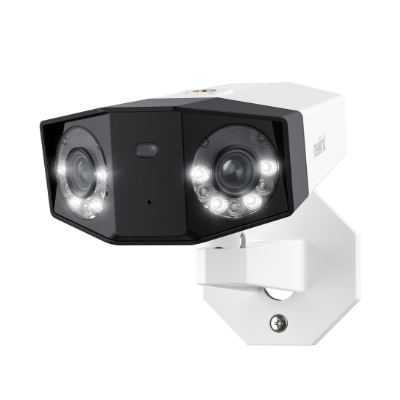
Power over Ethernet (PoE) security cameras transmit both high-speed video and continuous power through a single network cable, providing the most reliable surveillance connection available. At Reolink Canada, our PoE cameras and complete PoE security camera systems deliver up to 16MP ultra-HD clarity, 24/7 local recording, and smart AI detection with zero monthly fees. Choose the perfect hardwired setup to secure your home, driveway, warehouse, or commercial business!
No Product Found
Skip the expensive electricians. Our Power over Ethernet (PoE) cameras transmit both power and high-speed video through a single ethernet cable. Connect them directly to a Reolink NVR or PoE switch for a fast, DIY-friendly installation that delivers professional-grade stability.
Capture every second without paying monthly cloud subscriptions. A complete PoE NVR camera system saves your 24/7 continuous footage securely to a built-in local hard drive (up to 4TB). It is the most reliable, cost-effective way to monitor large properties or businesses around the clock.
Read license plates and identify faces day or night. Featuring cutting-edge 4K, 12MP, and 16MP resolutions paired with ColorX night vision, our PoE IP cameras capture unmatched detail. Built-in smart AI accurately detects people and vehicles, delivering precise alerts while ignoring shadows and swaying trees.
Built to survive heavy rain, snow, and dust with rugged IP66/IP67 housings. While officially rated down to -10°C (14°F), PoE outdoor cameras possess a massive advantage in freezing Canadian climates: continuous wired power generates internal heat, completely preventing the rapid battery death that plagues wireless cameras. For peak winter performance, simply mount them under eaves to block direct ice buildup.
A Power over Ethernet camera or PoE camera system is a type of security camera that transmits both electric power and video data over a single standard network cable. The video signal is transmitted on the same Ethernet cable that is used to transfer low-voltage power either from the recorder or a PoE switch.
Since the camera does not require an external power supply in the form of a power adapter or an adjacent power outlet, the camera can be attached anywhere on the ceiling, wall, or pole where the cable will reach.
The cable is up to 300 feet without additional equipment, and thus you can cover large homes, a small store, a warehouse, and parking lots with fewer parts and less labor.
When selecting a Power over Ethernet (PoE) camera system, evaluate these five core technical and installation factors:
1. Cable Length and Installation Path: Plan your wiring routes from the NVR to each camera location. Standard Ethernet cables run up to 300 feet without signal degradation. Ensure your paths avoid sharp edges, high-voltage lines, or direct water exposure.
2. NVR Power Budget & Channel Expansion: Calculate the total wattage required by all connected cameras (especially PTZ or spotlight models) to ensure your NVR security camera system can power every port simultaneously. Choose an 8 or 16-channel NVR if you plan to add more cameras later.
3. Resolution & Field of View: Select 4K (8MP) or 12MP/16MP dual-lens models for wide outdoor areas where license plate reading and facial recognition matter. Standard 5MP models work great for indoor rooms or close-range entryways.
4. Storage Capacity: For continuous 24/7 recording, ensure your NVR includes a pre-installed hard drive (e.g., 2TB to 4TB) with an extra drive bay for future storage expansion.
5. Camera Style (Bullet vs. Dome): Use Bullet cameras as visible outdoor deterrents, or Dome cameras for vandal-resistant, low-profile indoor and soffit mounting.
Neither technology is universally "better"—the right choice depends entirely on your property layout and installation capabilities:
- Choose PoE Cameras if: You want maximum network stability, continuous 24/7 NVR recording, ultra-high resolutions (up to 16MP), and zero battery maintenance. They are the best choice for homeowners and businesses willing to run network cables through attics, basements, or conduits.
- Choose Wi-Fi or Battery Cameras if: You rent your home, cannot drill holes in exterior walls, or need a quick wire-free installation. While Wi-Fi cameras rely on strong wireless signal coverage and occasional battery recharges (or you can opt for 100% wire-free battery cameras), they offer much faster, flexible mounting.
You must run a cable from each camera to the recorder, so attics, basement, or conduit work are required, and if the single cable is cut or the NVR power supply fails, the camera goes dark until you repair the line.
Reolink PoE cameras lead in Canada for home and small business users who want simple setup, free smart detection, and no cloud fees. Most importantly, these PoE models are built to withstand Canada’s harsh outdoor weather.
Yes, it records to the NVR and you can view live and playback on a local display or phone application, so long as you remain on the same network; you will just need internet connectivity, in case you would like to receive an alert or view the camera when you are not at home.
The main difference lies in how they process video data and the types of cameras they use. An NVR (Network Video Recorder) works with modern IP cameras (like PoE cameras) where the video is processed right at the camera and sent to the recorder over a standard Ethernet cable. A DVR (Digital Video Recorder) is older technology that uses analog cameras, which send raw, unprocessed video over thick coaxial cables to be processed at the recorder.
Ultimately, NVRs are much easier to install because a single Ethernet cable can supply both power and high-definition video (up to 16MP). They also offer better image quality, more flexible wiring, and advanced smart detection features compared to traditional DVR systems.


Be Prepared, Be Ahead
Never miss Reolink hot deals, news, and updates tailored for you.
Be Prepared, Be Ahead
Never miss Reolink hot deals, news, and updates tailored for you.

Google, Google Play, Google Assistant and related marks and logos are trademarks of Google LLC. Amazon, Alexa and all related logos are trademarks of Amazon.com, Inc. or its affiliates. Mac and Safari are trademarks of Apple Inc. App Store is a service mark of Apple Inc., registered in the U.S. and other countries. Firefox and the Firefox logo are trademarks of the Mozilla Foundation in the U.S. and other countries. Other product and company names mentioned herein may be trademarks of their respective companies.