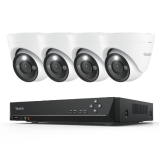
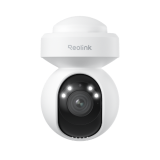
Bullet Camera

Filter By

No Product Found

4K and Higher Resolution for Detailed Monitoring

Reolink bullet cameras offer 4K and higher resolutions on selected models, helping capture details of people, vehicles, and activity around your property. For homes with long driveways, higher resolution provides more image detail when reviewing footage of visitors or vehicles approaching from a distance.

Smart Detection Without Subscription Fees

Selected Reolink bullet cameras distinguish between people, vehicles, and animals, helping reduce irrelevant motion alerts. For example, a camera overlooking a front driveway can notify you when a vehicle arrives, while animal detection helps you identify activity in the back garden. These supported detection features are available without mandatory monthly fees.

Full-Color Night Vision for Dark UK Evenings

Shorter daylight hours during UK autumn and winter make night vision particularly important. Reolink offers infrared, spotlight-assisted colour, and ColorX full-colour night vision on different bullet camera models.

ColorX technology captures full-colour footage in low-light conditions, making it particularly useful for monitoring front entrances with porch lighting or driveways illuminated by nearby streetlights, without constantly relying on visible spotlights.

PoE and Wi-Fi Options for Different Properties

Reolink PoE bullet cameras use a single Ethernet cable for power and data, making them suitable for permanent installations where continuous recording is required. For example, a camera mounted above a garage can connect to an indoor NVR through Ethernet cabling.

Wi-Fi models are more practical when running Ethernet cables across exterior walls is inconvenient, such as installing a camera overlooking a rear garden. Plug-in Wi-Fi cameras still require a nearby power source.

Local Recording Without Mandatory Monthly Fees

Reolink bullet cameras support local recording through microSD cards, compatible NVRs, or Home Hubs, depending on the model.

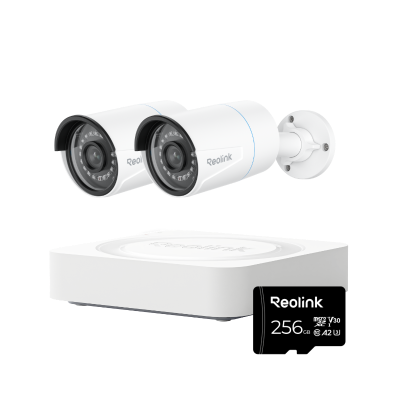
A microSD card may be sufficient for recording activity at a single front entrance, while an NVR offers centralised storage for multiple cameras covering a driveway, side passage, and back garden. Both options allow local recording without mandatory cloud subscription fees.

Weather-Resistant Design for UK Conditions

Reolink outdoor bullet cameras are designed for changing weather conditions, with selected models offering IP67 weather resistance. This is particularly useful for cameras mounted on exposed garage walls or overlooking side entrances without overhead shelter, where frequent rain and wind are common.

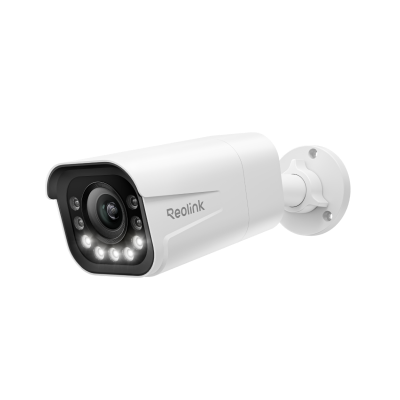
Reolink offers bullet CCTV cameras for different monitoring requirements. The RLC-811A is suited to locations where adjustable optical zoom is important, while the CX810 focuses on capturing colour footage in low-light conditions.

The Reolink RLC-811A is a 4K PoE bullet camera with 5X optical zoom, smart detection, motion-activated spotlights, and an IP67 weatherproof design. Its optical zoom allows users to narrow the viewing angle and capture more detail in a specific part of the scene without relying on digital enlargement.

Best For: Homes with long driveways or entrance gates positioned away from the house. For example, when the camera is mounted on the exterior wall near the garage, optical zoom can help focus on vehicles or visitors at the far end of the driveway.

The Reolink CX810 features 4K resolution and ColorX technology, combining an F1.0 aperture with a 1/1.8-inch image sensor for full-colour footage in low-light conditions. Its HDR technology helps balance bright and dark areas in scenes with uneven lighting.

Best For: Front entrances with porch lighting or driveways illuminated by nearby streetlights, particularly where users want to monitor nighttime activity without keeping a bright spotlight on throughout the night.
What is a Bullet Camera? Why Is It Called a Bullet Camera?

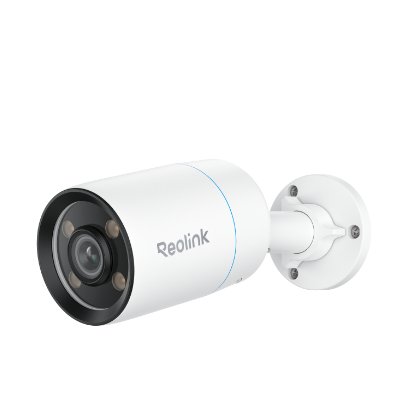
A bullet camera is a type of security camera with a long, cylindrical housing, commonly used for outdoor surveillance. Its fixed, directional design makes it suitable for monitoring specific areas such as driveways, entrances, and property boundaries.

It is called a bullet camera because its elongated shape resembles a bullet. Unlike dome cameras, bullet cameras have a more visible, protruding design and can typically be adjusted during installation to point towards a specific monitoring area.

How Do I Choose a Bullet Security Camera?

Resolution and Field of View: Choose at least 4MP for general home monitoring, or 4K (8MP, 3840 × 2160) for greater image detail. A horizontal viewing angle of around 90°–110° can suit a driveway or front garden, while 5X optical zoom is useful for focusing on distant gates.

Night Vision: Check the effective night vision range against the distance you need to monitor. Some bullet cameras offer infrared night vision up to 30 metres (100 feet), while low-light colour models are worth considering for entrances with existing outdoor lighting.

Smart Detection: For driveways facing busy roads, look for person and vehicle detection with adjustable motion zones. This allows you to exclude passing traffic or movement outside your property from alerts.

Weather Resistance: Choose an outdoor camera rated IP66 or IP67 for exposed locations, and check its operating temperature range. This is particularly important for cameras mounted on garage walls or other areas exposed to UK rain and winter weather.

Power and Connectivity: PoE cameras use one Ethernet cable for power and data, while Wi-Fi models require a suitable wireless signal and a compatible power source. Check whether your router supports the camera's 2.4 GHz or 5 GHz Wi-Fi band before installation.

Recording and Storage: For 24/7 driveway monitoring, consider continuous recording with an NVR or a high-capacity microSD card, such as 256GB or 512GB where supported. For less frequently used entrances, motion-triggered recording may reduce storage consumption.

What's the Difference Between Dome and Bullet CCTV Cameras?

The main difference is their housing and installation style. A bullet camera has a visible elongated body and adjustable bracket, so its viewing direction easy to identify. A dome camera uses a compact dome-shaped housing that often blends more discreetly into ceilings and building surfaces.

What's the Difference Between Turret and Bullet Cameras?

A turret camera has a compact eyeball-style design, while a bullet camera has an elongated housing mounted on a bracket. Both can provide fixed surveillance, and their viewing direction can typically be adjusted during installation.

Turret cameras are compact and work well under eaves or on walls and ceilings. Bullet cameras are more visually noticeable and make the monitored direction easier to recognize, which can be useful for visible perimeter surveillance.

What Is a Bullet CCTV Camera Used For?

A bullet camera is commonly used to monitor driveways, front doors, back gardens, side entrances, garages, and property boundaries in UK homes. For terraced and semi-detached houses, it can be positioned to cover narrow side passages or front entrances, while detached properties may benefit from cameras focused on longer driveways and entrance gates. Bullet cameras are also used in shop entrances, car parks, and commercial premises. When installing CCTV in the UK, aim to minimise unnecessary recording of neighbouring properties and public spaces.

What's the Difference Between a Bullet Camera and a PTZ Camera?

A traditional bullet camera generally monitors a fixed direction, although its viewing angle can be adjusted during installation. A PTZ camera can remotely pan, tilt, and often zoom to monitor different areas. Bullet cameras are useful for continuous monitoring of a defined zone, while PTZ cameras provide more flexible coverage of larger areas.

How Far Can a Bullet Security Camera See?

Most bullet security cameras offer night vision ranges of around 20–30 metres (65–100 feet), while some long-range models can reach 50 metres (164 feet) or more. However, the distance at which a camera captures clear details depends on its resolution and lens.

A 4K (8MP) camera provides more image detail than a 1080p model at the same viewing angle. A 90°–110° horizontal field of view is suitable for monitoring wider areas, while a narrower angle or 5X optical zoom can capture more detail at longer distances. Keep in mind that the advertised night vision range indicates visibility, not guaranteed facial identification distance.

Are Bullet Cameras Good for Outdoor Use?

Yes. Many bullet cameras are designed for outdoor surveillance and use weather-resistant housings to withstand rain, dust, and changing temperatures. Check the specific camera's IP rating and operating temperature before outdoor installation, since outdoor durability varies by model.

Do Bullet Cameras Need Wi-Fi?

Not necessarily. Bullet cameras can use Wi-Fi, Ethernet/PoE, or other connections depending on the model. PoE bullet cameras receive power and network data through one Ethernet cable, while Wi-Fi models typically use Wi-Fi for data and another power source.

Best For

Low-light entrances, yards & parking areas
Everyday entrances, yards & perimeter monitoring
Driveways, gates & areas needing adjustable detail

Resolution

4K
5MP
4K

Lens & Viewing Style

Fixed lens for general-area monitoring
Fixed lens for everyday directional monitoring
Optical zoom for adjustable, focused monitoring

Night Vision

ColorX full-color night vision
IR night vision
IR & spotlight-assisted color night vision

Smart Detection

Person, vehicle & animal detection

Connection & Power

PoE
PoE
PoE

Audio

Two-way audio
Built-in microphone
Two-way audio

Local Recording

microSD card; Reolink NVR

Outdoor Use

Weather-resistant
Weather-resistant
Weather-resistant