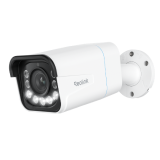
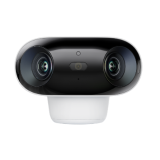
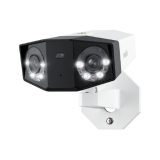
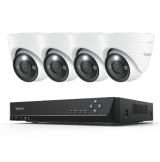
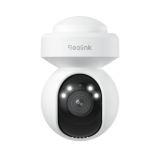
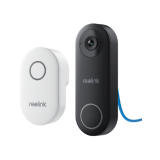
Upgrade your front door security with the Reolink wireless doorbell camera, designed to deliver reliable protection without any monthly subscription fees. Featuring smart motion detection, clear high-definition video, and real-time alerts, it helps you see and respond to every visitor, delivery, or unexpected activity instantly.
Series/Type
Scenarios
Power Options
Network connection
Resolution
Lens
Night Vision
Weatherproof
Channels
Color
Compatibility
Special Features


A wireless doorbell camera combines a traditional doorbell with a smart security camera and operates using a rechargeable battery or solar power.
To conserve energy, it stays in low-power sleep mode and activates only when someone presses the doorbell or when built-in PIR (Passive Infrared) sensors detect motion. Once triggered, the device connects to your home Wi-Fi network, captures video and audio, and wirelessly sends data to a cloud server, local storage device, or smartphone app for real-time notifications, live viewing, and two-way communication. Most models support either cloud storage subscriptions or local storage options.
No Subscription Fees with True Local Storage
Many wireless doorbells require monthly subscriptions to access recorded footage and video history. Reolink avoids this extra cost by including an indoor chime that also works as a local storage hub. By inserting a microSD card of up to 512GB into the chime, users can store footage locally and enjoy video playback, remote viewing, and smart alerts without ongoing subscription fees.
2K+ Video Quality and Head-to-Toe View
Traditional wireless doorbells often provide limited viewing angles and lower-resolution footage. Reolink delivers sharper 2K+ (4MP) video quality and uses a 1:1 aspect ratio with a 180° head-to-toe field of view. This allows homeowners to clearly see visitors as well as packages placed directly below the doorbell.
Smart AI Detection for Accurate Alerts
False alerts caused by pets, moving branches, or passing vehicles are common with many doorbells. Reolink integrates edge AI directly into the device to intelligently distinguish between people, vehicles, and irrelevant motion. This reduces unnecessary notifications and helps users focus on important events.
Stable Connection with Dual-Band Wi-Fi
Wireless doorbells installed outdoors can experience connection issues due to walls and distance from the router. Reolink supports both 2.4GHz and 5GHz Wi-Fi bands, allowing users to choose longer-range coverage or faster transmission speeds for smoother live streaming and more stable performance.
Flexible Power Options for Long-Term Use
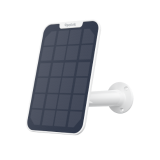
Reolink wireless doorbells are designed for wire-free operation with rechargeable batteries, but they also offer additional power options. Users can connect the device to existing doorbell wiring or pair it with a Reolink Solar Panel for continuous charging and reduced maintenance.
Seamless Smart Home Integration
Reolink doorbells integrate easily with smart home ecosystems. Users can view live feeds through voice commands using Google Assistant or Amazon Alexa devices. The system also supports local platforms such as Home Assistant, providing more flexibility for advanced smart home setups.
1. Power Source & Maintenance
Wired Doorbell Cameras connect directly to your home's existing low-voltage doorbell wiring, which is usually powered by a transformer providing 16V to 24V AC. Because they have a constant, uninterrupted stream of electricity, you never have to worry about the device dying or take it down to recharge a battery.
Wireless Doorbell Cameras run entirely on removable or built-in rechargeable batteries, making them independent of your home's electrical grid. Depending on how many visitors or cars trigger the motion sensor, you will need to take the doorbell down or swap out the battery pack to recharge it every 2 to 6 months.
2. Installation & Flexibility
Wired Installation can be a bit tricky and restrictive because the camera must be placed exactly where your existing doorbell wires peek out of the wall. If you do not have pre-existing wiring, you face the extra hassle of hiring an electrician to run new lines or buying a specialized plug-in power adapter to route through a nearby window or indoor wall outlet.
Wireless Installation is the ultimate DIY-friendly experience because you can mount the device absolutely anywhere regardless of power infrastructure. It can be attached to a brick wall, an apartment door frame, or a wooden fence using just a few screws or heavy-duty double-sided tape, allowing you to complete the entire setup in under 10 minutes.
3. Recording Capabilities & Speed
Wired Performance is vastly superior because the constant power supply allows the camera to run advanced features without draining power. Many wired models support 24/7 continuous recording and "Pre-Roll" technology, which constantly captures a rolling 4-second buffer of video so you can see exactly what happened before a motion sensor was tripped.
Wireless Performance is inherently limited because the camera must enter a low-power "sleep mode" to preserve battery life when the front porch is quiet. It only wakes up to record when someone presses the button or triggers the sensor, which can introduce a slight lag that occasionally results in capturing only the back of someone's head as they walk away.
4. Weather Resistance & Lifespan
Wired Lifespan tends to be much longer because the device does not rely on chemical batteries that degrade over time. Without a lithium-ion battery packed inside the housing, wired doorbells can tolerate brutal winter blizzards and scorching summer heat waves without experiencing sudden power drops or operational failure.
Wireless Lifespan is highly vulnerable to the elements because extreme seasonal temperatures directly attack battery chemistry. If you live in a region where temperatures drop below freezing, you will notice the battery drains significantly faster in the winter, and the device may temporarily shut down or refuse to charge until the weather warms up.
1. Power Supply & Wiring
The Reolink WiFi Doorbell is a hardwired device. It requires constant power, which you can supply by wiring it into your home's existing doorbell infrastructure (12–24V AC) or by plugging it directly into an indoor wall outlet using the included 24V DC power adapter.
The Reolink Battery Doorbell runs primarily on a built-in rechargeable battery, making it completely wire-free. While you can connect it to existing doorbell wires, doing so will only "trickle charge" the internal battery over time rather than power the doorbell directly, and it will not trigger your house's old mechanical chime.
2. 24/7 Continuous Recording
The Reolink WiFi Doorbell supports full 24/7 continuous recording because it has a non-stop power supply. You can insert a MicroSD card into the unit or sync it with a Reolink NVR/Home Hub to record every single second of your front porch, ensuring you never miss a pre-motion event.
The Reolink Battery Doorbell does not support 24/7 continuous recording. To preserve battery life, it stays in a low-power "sleep mode" and wakes up instantly to record only when it detects motion (people, vehicles, packages) or when someone physically presses the button.
3. Aspect Ratio & Field of View
The Reolink WiFi Doorbell features a 4:3 landscape aspect ratio with a resolution of 2560 × 1920. This traditional horizontal view provides wider coverage of areas such as the front yard, driveway, and entrance path. However, it may capture less detail directly below the doorbell, where packages are often placed.
The Reolink Battery Doorbell uses a 1:1 square aspect ratio with a resolution of 2048 × 2048. This head-to-toe viewing angle offers a taller vertical field of view, making it easier to monitor visitors from head to toe and clearly see parcels left directly in front of the door.
4. Smart Detection Features
The Reolink WiFi Doorbell relies on standard on-device AI algorithm updates. While it does an excellent job of instantly differentiating between human beings and vehicles to prevent false alarms, its wide aspect ratio makes it less optimized for specific floor-level tracking.
The Reolink Battery Doorbell includes specialized Package Detection out of the box alongside person and vehicle alerts. Because the 1:1 lens is designed to monitor the ground, the camera's internal AI chip specifically tracks when a parcel is dropped off or taken away.
5. App Wake-Up & Loading Speed
The Reolink WiFi Doorbell offers instant live-view loading speeds. Because the camera is always awake and connected to your internet router, tapping the notification on your phone opens the video feed immediately with zero buffering lag.
The Reolink Battery Doorbell has a minor delay when opening the live view. Because it has to wake up from its power-saving sleep cycle and re-establish a handshake with your Wi-Fi network, it can take a few seconds to buffer the video feed when you open the app.
Front Door Security
Front door security is one of the primary uses of wireless video doorbells, helping homeowners monitor entrances and deter suspicious activity. They can capture package theft incidents, discourage potential burglars who notice the visible camera, and record evidence of vandalism, property damage, or individuals behaving suspiciously around the property.
Package Delivery Management
Wireless video doorbells make package management easier by providing real-time delivery monitoring. Users can receive instant alerts when couriers arrive, even if the doorbell is not pressed, and use two-way audio to provide delivery instructions remotely, such as asking drivers to leave packages in a safer location while the homeowner is away.
Contactless Screening & Visitor Management
Video doorbells improve convenience and personal safety by allowing homeowners to communicate with visitors without opening the door. This is useful for screening unexpected guests, avoiding unwanted sales visits, safely answering the door at night, or assisting situations where family members are alone or unable to quickly reach the entrance.
Remote Monitoring While Away
Because wireless video doorbells connect to smartphones through the internet, users can monitor their homes remotely from work, while traveling, or during vacations. They can check when children return home, verify service visits, monitor pet sitters, and even create the impression that someone is home by responding to visitors remotely.
Rental Properties, Apartments, and Temporary Living
Battery-powered wireless video doorbells are well suited for renters and temporary residences because they require minimal installation and no permanent wiring modifications. Apartment residents can improve front-door security without violating lease agreements, while vacation rental hosts can monitor guest arrivals and property access without placing cameras indoors.
Smart Home Integration
Wireless video doorbells can become part of larger smart home ecosystems by connecting with other devices and automations. Motion events can trigger outdoor lights, live video feeds can appear on smart displays, and homeowners can integrate doorbells with smart locks to verify visitors and remotely grant access when needed.
Yes, you can absolutely install a doorbell without any wiring. Modern wireless video doorbells run entirely on rechargeable batteries and connect to your home internet via Wi-Fi. This means installation requires no drilling through walls, no handling of electrical cables, and no need to hire an electrician.
The Reolink Video Doorbell Battery requires no monthly fee, saving 2K+ HD video directly to a local MicroSD card with free built-in smart detection.