Your cart is empty.

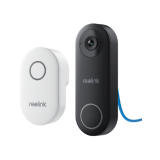
Wireless doorbell cameras connect to your home Wi-Fi to provide live video, motion alerts, and two-way communication at your front door. Reolink wireless video doorbells offer clear video, smart detection, flexible power options, and local storage without mandatory monthly fees. Ideal for houses, apartments, and homes without existing doorbell wiring.
No Product Found
Reolink wireless doorbell cameras support local storage without mandatory monthly fees. The original Reolink Battery Doorbell supports a microSD card up to 256GB, while the latest Video Doorbell 2nd Gen supports up to 512GB. Both models can also connect to the Reolink Home Hub for expanded storage and centralized management.
The Reolink Video Doorbell 2nd Gen supports both battery-powered and wired operation. Use the rechargeable battery for flexible installation and motion-triggered recording, or connect it to compatible existing doorbell wiring for continuous power and 24/7 recording.
Powered by the Qualcomm® Micro-Power Wi-Fi solution, the Reolink Video Doorbell 2nd Gen can deliver up to 300 days of operation on a full charge, depending on usage and settings.
With 2K 4MP resolution, HDR, and infrared night vision, Reolink wireless video doorbells capture clear footage in bright, dark, and high-contrast conditions for more reliable front door monitoring.
The best wireless doorbell camera depends on your home's setup and security needs. Look for features such as 2K or higher resolution, AI person/package detection, dual-band Wi-Fi, local storage, and long battery life.
If you want to avoid monthly fees, choose a wireless doorbell camera no subscription that stores recordings locally on a microSD card, Home Hub, or NVR. Models that also support both battery and wired power offer the greatest installation flexibility.
Yes. A wireless camera doorbell can be installed without existing doorbell wiring. Battery-powered models connect to your home's Wi-Fi and can be mounted with screws or adhesive, making them ideal for renters or homes without a traditional doorbell system. Some newer doorbell camera wireless models also support optional wired power if you decide to upgrade later.
The main drawback of a wireless doorbell camera is that battery-powered models require periodic recharging or a compatible solar charger. They may also rely on a stable Wi-Fi connection for live viewing and notifications. However, modern wireless doorbells with long battery life, smart motion detection, and local storage have significantly reduced these limitations for everyday home security.
Neither option is universally better—it depends on your needs.
A wireless doorbell camera is easier to install, making it perfect for renters, apartments, and homes without existing wiring. A wired doorbell camera provides continuous power and is better suited for users who want 24/7 recording without worrying about battery charging.
If you want maximum flexibility, choose a doorbell camera wireless model that supports both battery and wired operation, allowing you to switch between installation methods as your needs change.
When choosing a wireless doorbell camera, consider video resolution, power options, Wi-Fi connectivity, smart detection, storage, and subscription costs.
- Video Quality: Choose at least 2K resolution with HDR and night vision for clear footage of visitors and packages.
- Power Options: Battery-powered models are easier to install, while wired power reduces the need for recharging.
- Wi-Fi Connectivity: Look for reliable Wi-Fi support, including dual-band 2.4/5 GHz connectivity if available.
- Smart Detection: Person and package detection can help identify important activity and reduce unwanted alerts.
- Storage & Subscription: Choose local storage options, such as microSD cards or a compatible Home Hub, to avoid mandatory monthly fees.
- Battery Life: Compare battery life under real-world conditions, especially for busy entrances.
No, not all wireless doorbell cameras require a subscription. Reolink wireless video doorbells support local recording to compatible microSD cards or Home Hub storage without mandatory monthly fees. You can access supported camera features through the Reolink App without purchasing a cloud storage plan.


Be Prepared, Be Ahead
Never miss Reolink hot deals, news, and updates tailored for you.
Be Prepared, Be Ahead
Never miss Reolink hot deals, news, and updates tailored for you.

Google, Google Play, Google Assistant and related marks and logos are trademarks of Google LLC. Amazon, Alexa and all related logos are trademarks of Amazon.com, Inc. or its affiliates. Mac and Safari are trademarks of Apple Inc. App Store is a service mark of Apple Inc., registered in the U.S. and other countries. Firefox and the Firefox logo are trademarks of the Mozilla Foundation in the U.S. and other countries. Other product and company names mentioned herein may be trademarks of their respective companies.