Your cart is empty.

Why Choose Reolink Turret Security Cameras?
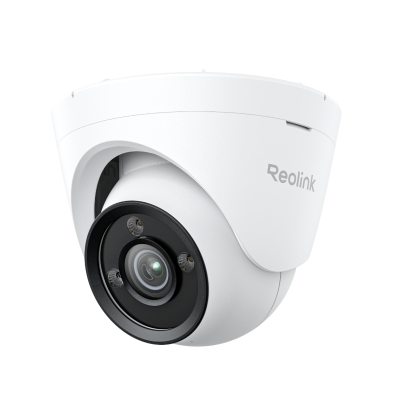
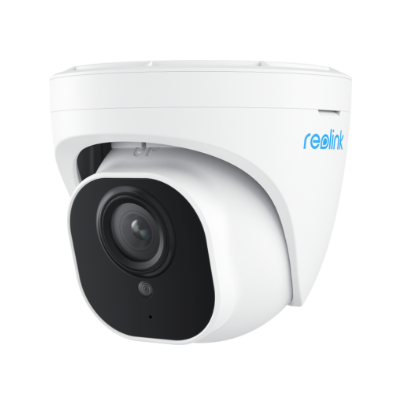
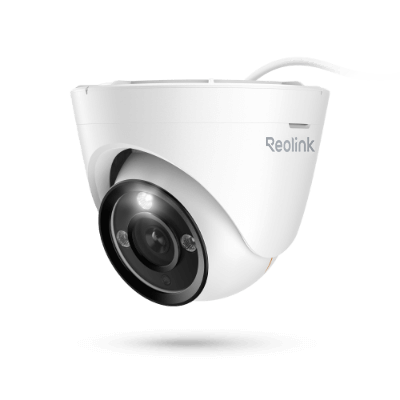
Reolink turret security cameras use a compact, adjustable ball-and-socket design that makes it easy to aim the lens exactly where coverage is needed. Compared with bulkier camera housings, the low-profile shape fits neatly under eaves, on ceilings, or on exterior walls while allowing flexible positioning for entrances, driveways, garages, and storefronts.
Compact Turret Design with Flexible Viewing Angles
The defining advantage of a turret camera is its adjustable lens housing. You can rotate and tilt the camera to focus on a specific doorway, driveway, parking area, or perimeter without repositioning the entire mount. The compact design also helps the camera blend more naturally into residential and commercial environments.
Easy Installation for Walls, Ceilings, and Eaves
Reolink turret cameras are suitable for multiple mounting positions, including ceilings, walls, and under eaves. This flexibility makes them useful for front doors, garages, corridors, shops, and other locations where camera angle and installation space matter.
Clear Day and Night Monitoring
Reolink turret security cameras combine the flexible turret form factor with high-resolution video and night vision. Depending on the model, users can choose infrared or color night vision for clearer monitoring after dark.
Smart Detection for Important Events
AI-powered detection can help distinguish people, vehicles, and other supported targets from general motion. Custom detection zones and sensitivity settings let users focus on areas such as doors, gates, driveways, and parking spaces.
Reliable PoE and Subscription-Free Local Storage
For 24/7 monitoring, Reolink PoE turret cameras can transmit power and data through a single Ethernet cable. Depending on the model, recordings can also be stored locally on a microSD card, Reolink NVR, or FTP server without requiring a mandatory cloud subscription.
Which Reolink Turret Security Camera Should You Choose?
For High-Resolution Home & Driveway Monitoring: Reolink RLC-1224A
Choose the Reolink RLC-1224A for entrances, driveways, garages, and other areas where image detail matters. It combines 12MP Ultra HD, person/vehicle detection, and two-way audio with an adjustable turret-style body that makes it easy to aim the camera toward specific activity zones.
For Low-Light Monitoring: Reolink CX820
For driveways, side yards, and entrances with limited nighttime lighting, the Reolink CX820 is designed for stronger low-light performance. Its F1.0 aperture, HDR, and full-color night vision make it suitable when retaining color detail after dark is a priority.