Solar Powered Security Cameras

Filter By

No Product Found

High-quality video: Reolink solar security cameras offer resolutions up to 4K 8MP (3840 × 2160), capturing more detail than standard 1080p cameras. Higher-resolution models are particularly useful for monitoring driveways, front entrances, and larger gardens where identifying people or vehicles matters.

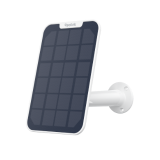
Efficient solar energy usage: Reolink solar cameras support 3W, 6W, or 12W solar panels, depending on the model. Under ideal conditions, selected cameras need as little as 10–20 minutes of direct sunlight per day to maintain battery power in standard recording mode. In the UK, actual charging performance depends on seasonal daylight, weather, and panel placement.

Smart AI detection: Person, vehicle, and animal detection distinguishes relevant activity from general motion. For example, a camera overlooking a driveway can notify you when a vehicle arrives, while detection zones can exclude a busy pavement or neighbouring property. Detection sensitivity and alert settings can be adjusted in the Reolink App.

Wireless & easy installation: Battery and solar power eliminate the need to run electrical cables to the camera. This makes installation practical on brick walls, garden sheds, garages, and detached buildings. Wi-Fi models require a suitable wireless connection, while 4G LTE models can monitor locations without Wi-Fi, provided mobile network coverage is available.

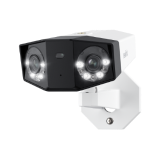
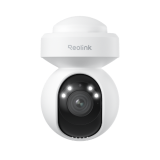
Flexible design options: Fixed-lens cameras monitor specific areas such as entrances and garden gates. Pan-and-tilt models can change viewing direction to cover wider outdoor spaces, while dual-lens cameras capture multiple perspectives or provide panoramic coverage. The right design depends on the size and layout of the area you want to monitor.

Flexible recording options: Reolink solar cameras support microSD card storage, while selected models can also record to a compatible Reolink Home Hub or NVR. Most standard battery-powered models record motion-triggered events, while models with Always-on Video (AOV) support extended recording using different frame rates. Local storage is available without mandatory monthly subscription fees.

Night vision performance: Infrared night vision captures footage in black and white when ambient light is limited. Selected models feature ColorX technology for full-colour imaging in low-light conditions, while others use spotlights for colour night vision. For UK gardens, driveways, and entrances, the appropriate night vision mode depends on available lighting and the distance you need to monitor.

Instant alerts & remote access: Receive notifications when supported motion events are detected and check live footage through the Reolink App. Review recordings, adjust detection zones, and use two-way audio on compatible models. Wi-Fi cameras require an internet-connected network for remote access, while 4G models use a SIM card and mobile data connection.
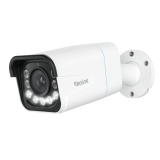
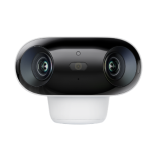
Features Reolink Go PT Ultra Reolink TrackMix LTE Argus 4 Pro
Best For Remote Farms & Construction Sites Large Gardens & Farm Entrances Driveways & Front Gardens
Resolution 4K 8MP Up to 4K 8MP 4K 8MP
Network Connection 4G LTE 4G LTE Dual-Band Wi-Fi 6
Camera Design Single Lens Dual Lens Dual Lens
Field of View / Coverage 355° Pan, 140° Tilt 355° Pan, 90° Tilt 180° Horizontal
Zoom Digital Zoom 6× Hybrid Zoom Digital Zoom
Auto Tracking Yes Yes No
Night Vision Infrared & Spotlight Colour Infrared & Spotlight Colour ColorX Full-Colour
Solar Power 6W Solar Panel 2 6W Solar Panel 2 6W Solar Panel 2
Smart Detection Person, Vehicle, Animal Person, Vehicle, Animal Person, Vehicle, Animal
Local Storage Up to 128GB microSD Up to 512GB microSD Up to 512GB microSD
Monthly Subscription No Mandatory Fee* No Mandatory Fee* No Mandatory Fee

What Are the Best Places to Use Solar Powered Security Cameras?

Solar powered security cameras are ideal for locations where access to mains electricity is limited or installing power cables is difficult. Common applications include gardens, driveways, garages, farms, construction sites, and remote properties. Wi-Fi solar cameras are suitable for areas within router coverage, while 4G models are better for remote locations without Wi-Fi, provided mobile network coverage is available.

What Are Main Types of Solar Cameras?

Before buying, decide how the camera will send footage to you. Two common options cover most homes.

- 4G solar camera: 4G cellular camera uses a mobile data SIM to stream or store clips. It suits remote fields, caravans, and boats where fixed broadband never arrives. Check the signal map and choose a plan with enough data for high-quality video.

- WiFi solar-powered camera: This version links to your router. It needs a steady WiFi signal but no phone contract. Homes with strong outdoor coverage often pick this path because the home's internet already carries other smart devices.

What to Consider When Choosing the Best Solar Security Camera in the UK?

A solar panel security camera only works well when its parts match your setting. Think about the points below before you click “buy.”

- Panel and battery size: A larger solar panel gathers more light during short winter days, and a bigger battery stores that energy. Match both to the North of England or the Scottish Highlands if you live there.

- Solar-powered security camera with night vision UK rating: Infrared LEDs and image sensors define how well the unit sees after dark. Check the stated range in metres and look for clear demo clips.

- Weather resistance: Seek an IP65 or higher code. Constant rain, salt air near the coast, and low winter temperatures all push the housing prices. Good seals keep water and dust out.

- Mounting options: Some kits offer adjustable brackets, extension cables, or stake mounts for the panel. These extras let you tilt the surface toward the low winter sun.

- Storage and alerts: Choose between cloud plans, a built-in SD card, or both. Push notifications on motion save data because the camera records only when it detects movement.

- Network match: Check that a 4G unit handles the bands of your chosen phone network or that a WiFi model reaches your router with at least two bars of strength.

Do You Need Wi-Fi for a Solar Camera?

It depends on the camera type. Wi-Fi solar security cameras require a Wi-Fi connection for remote live viewing, motion alerts, and video playback through an app. 4G solar cameras use a SIM card and mobile data instead, making them suitable for locations without Wi-Fi, such as farms and remote properties. Some solar cameras can also record footage locally to a microSD card without an internet connection, but remote access and notifications will be unavailable.

What Is the Best Solar CCTV Camera?

The Reolink OMVI 2i Ultra is a strong choice for solar-powered outdoor security. Its 4K + 3K dual-lens system combines wide-angle monitoring with 355° pan and automatic tracking, making it suitable for gardens, driveways, and larger outdoor areas. A removable 10,000mAh battery and 6W solar panel support extended operation, while dual-band Wi-Fi 6 and local storage up to 512GB provide flexible connectivity and recording without mandatory subscription fees.

How Much Is a Solar CCTV Camera?

Prices start at approximately £90 for the entry-level WiFi, which includes SD drive storage, to £250 for a high-quality 4G, with a large screen and excellent night vision. Provide the price of a 4G data plan or cloud subscription in case of off-site backups.

Does a Solar-powered Camera Work at Night?

Yes. A solar-powered camera works at night by using energy stored in its rechargeable battery during the day. The solar panel generates electricity in daylight to charge the battery, which then powers the camera after sunset. As long as the battery has sufficient charge, the camera can continue recording, detecting motion, and sending alerts throughout the night.

Many modern solar security cameras, including Reolink models, also feature infrared or full-colour night vision, allowing them to capture clear footage in low-light conditions.

How Long Does Solar CCTV Last?

A solar security camera can last 5 to 10 years or more, depending on the quality of the camera, battery, solar panel, and local weather conditions. The camera itself is designed for long-term outdoor use, while the rechargeable battery may gradually lose capacity after several years and can typically be replaced if needed.

How Long Does It Take to Charge a Solar Security Camera?

The charging time depends on the battery capacity, solar panel output, and available sunlight. Rather than fully charging the battery every day, a solar panel is designed to continuously replenish the battery, helping the camera operate for extended periods with minimal manual charging.

For example, Reolink solar security cameras paired with Reolink Solar Panel 2 (6W) or Solar Panel 2 Plus (12W) can maintain sufficient battery power under normal outdoor conditions. As little as 10 minutes of direct sunlight per day is enough to keep many Reolink battery-powered cameras running continuously under typical motion-triggered recording scenarios.