Your cart is empty.

A solar security camera is a 100% wireless surveillance device powered by a rechargeable battery and a solar panel, eliminating the need for AC electrical wiring. At Reolink Canada, our solar powered outdoor security cameras connect to high-efficiency solar panels to deliver continuous solar charging, up to 4K UHD video, smart AI detection, and reliable IP weatherproof protection. Whether securing a residential home or a remote off-grid location, enjoy continuous monitoring with zero monthly fees.
No Product Found
Outdoor security hardware needs to be tough enough to handle unpredictable weather. Our solar-powered cameras feature robust IP-rated weatherproof housings engineered to repel heavy rain, wind-driven dust, and wet snow. Whether mounted on an exposed barn or an open driveway gate, your camera's internal components remain safely protected against the elements year-round.
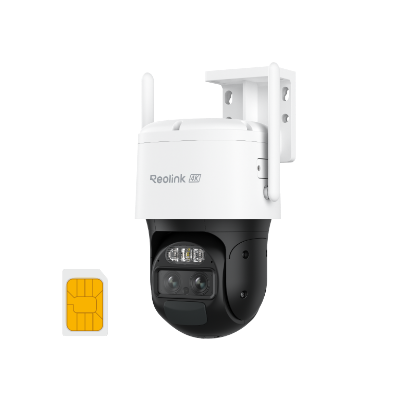
Monitor remote cabins, farms, or distant driveways without needing a Wi-Fi router. Our solar security camera lineup includes dedicated cellular models that operates on a 4G LTE network using a standard SIM card. You get uninterrupted remote viewing, true wireless freedom, and instant mobile alerts from anywhere in the country.
We engineered our solar lineup to deliver maximum performance with stunning resolutions up to 4K Ultra HD. With Reolink, you get incredibly sharp, forensic-level detail alongside powerful color night vision to clearly identify faces and vehicles around the clock.
Best-in-class surveillance features shouldn't come with additional cost. Reolink solar security cameras process smart person, vehicle, and animal detection locally on the device itself. All 4K event footage is stored securely on an onboard microSD card or synced to an indoor Reolink Home Hub, giving you accurate alerts and complete video ownership with absolutely zero monthly fees!
A security camera using solar energy is not a magic hit, but a useful device. It glows, literally, where there is weak demand or unreliable supply of grid power. In the case of most homeowners, farmers, and small businesses, the payback is quick enough to make the early outlay worthwhile.
- True wireless freedom: A solar-powered camera does not need a wall outlet. The built-in panel uses sunlight, fills the battery, and keeps the camera awake.
- Lower electric bills: It draws energy from the sun, so your monthly utility statement stays unchanged. One camera will not break the bank, yet several units can add up.
- Continued operation in a blackout: Bad storms knock down lines, burglars cut power, a breaker trips—these things happen. A charged battery stays on guard when the grid goes dark.
- Quiet, low-maintenance: Solar modules have no moving parts. Routine care is a quick wipe to clear dust or snow.
- Expanded coverage: Farms, remote sheds, and long driveways often sit far from indoor plugs. A solar camera brings active video security to these blind spots without costly trenching or extra poles.
A reliable solar security camera should deliver continuous, uninterrupted monitoring without frequent maintenance or recurring costs. When evaluating models, look for these key standards:
High Solar Efficiency & Battery Reserve: A quality solar panel recharges the camera quickly even on overcast days, paired with a battery large enough to handle multiple days of low sunlight.
Weatherproof Durability: Ensure the camera body has a solid IP weather rating (such as IP65 or higher) to protect internal components against heavy rain, dust, and snow.
Sharp Resolution & Night Vision: Opt for 2K or 4K Ultra HD resolution with color night vision so you can read license plates and identify faces in dark conditions.
Smart Connectivity & Local Storage: Choose reliable dual-band Wi-Fi or 4G LTE cellular options for off-grid sites, alongside onboard microSD storage to keep your footage private with zero monthly fees.
Choosing the right connection type depends entirely on your installation location:
Choose a Solar Wi-Fi Camera if: Your camera will be mounted within 15 to 30 meters of your home router (e.g., front driveways, back patios). It streams video over your home network with zero data costs.
Choose a 4G LTE Cellular Solar Camera if: You are securing a remote location without any internet access such as a rural farm, construction site, or distant boat dock. It operates on cellular networks using a standard SIM card.
Selecting a reliable solar camera requires evaluating how the hardware handles winter sunlight, severe cold, and remote internet access:
Solar Panel Efficiency in Winter: Choose high-efficiency panels capable of trickle-charging the battery even on overcast winter days. Mount the panel at a 45-degree angle facing true South to maximize weak winter sunlight and allow snow to slide off easily.
Battery Capacity for Extreme Cold: Standard lithium batteries drain much faster below -20°C. Look for high-capacity rechargeable batteries (like those in the Reolink Go PT Ultra) that provide a massive power reserve to keep the camera active through consecutive cloudy days.
Wireless Connectivity (Wi-Fi vs. 4G LTE): If mounting near your home, a solar Wi-Fi camera connects to your router with zero data costs. For off-grid rural properties, farms, or sheds out of router range, a 4G LTE cellular solar camera uses a standard SIM card to ensure uninterrupted remote access.
Weatherproofing (IP65+): Ensure the camera housing and the solar cable connection have at least an IP65 rating to withstand Canadian driving rain, freezing rain, and wind-driven snow.
Resolution & Night Vision: Higher resolutions like 4K are crucial for zooming in on distant license plates across large yards. Pair this with ColorX full-color night vision to maintain vivid nighttime clarity without the heavy battery drain caused by traditional bright spotlights.
Building a solar camera setup sounds tough, yet most of the work is plain and methodical.
1. Survey the site: Walk the property at noon. Note sun paths, shade lines, and high-traffic zones. Mark viewpoints that cover doors, gates, and blind corners.
2. Choose the mounting points: Pick a sturdy surface—wall, pole, or eave—facing true south in the Northern Hemisphere. The panel must catch midday light. Check that the Wi-Fi or cellular signal is strong here.
3. Install the panel and camera: Screw the bracket tight. Angle the panel about 30–45 degrees to the horizon unless your local latitude demands more tilt. Clip the weather-proof cable to the camera body.
4. Place the network hub or router: If you run several cameras, think about a dedicated Wi-Fi extender near the group. A clear line of sight reduces dropouts.
5. Set up storage: Choose a micro-SD card inside the camera, a network video recorder (NVR), or secure cloud storage. Local cards are cheap but fill up. Cloud plans cost more, yet keep files off-site.
6. Test day and night performance: Trigger motion alerts, view live feeds, and walk through the frame at dusk. Adjust sensitivity so swaying trees do not flood your phone with false alarms.
7. Secure remote access: Update firmware, create a strong password, and, where possible, enable two-factor sign-in. An open camera feed invites trouble.
The core idea is simple: panels charge a battery, and the battery powers the camera. For small home units, the panel plugs straight into the camera's charge port. The internal charge controller manages voltage. Larger multi-camera rigs add a separate charge controller, a deep-cycle battery bank, and perhaps a small inverter if the cameras need AC.
The upfront cost is higher than a plug-in camera. You pay for the panel, the bigger battery, and often a sturdier housing. Yet the math shifts when wiring is tough or when utility bills rise. Add in the value of coverage during a power cut, and the long view favors solar for many outdoor jobs.
The camera itself does not demand a fee once you buy it. There is no meter on sunshine. Costs appear only when you choose cloud video storage or cellular data. Some brands bundle a limited cloud service free for the first year, then charge a few dollars per month.
Yes, solar-powered security cameras offer continuous, eco-friendly power, and reduce the need for frequent battery replacements or wiring for electricity. They are especially useful in areas with ample sunlight. Many models use WiFi or 4G connectivity. Some of the best solar security camera systems are weatherproof, making them perfect for outdoor use.
Yes, most solar security cameras require WiFi to transmit video footage and enable remote monitoring, but some models also use 3G/4G connectivity for internet connection. The solar panels that power the camera, however, don't use WiFi for their operation.
Yes, solar-powered security cameras work at night as long as they have sufficient battery storage. The battery charges during the day with sunlight and provides power for a certain period of time.
Solar security cameras generally last between 3 to 5 years, with some advanced models lasting even longer. The lifespan of solar-powered cameras and systems depends on factors such as build quality, battery life, and environmental conditions.


Be Prepared, Be Ahead
Never miss Reolink hot deals, news, and updates tailored for you.
Be Prepared, Be Ahead
Never miss Reolink hot deals, news, and updates tailored for you.

Google, Google Play, Google Assistant and related marks and logos are trademarks of Google LLC. Amazon, Alexa and all related logos are trademarks of Amazon.com, Inc. or its affiliates. Mac and Safari are trademarks of Apple Inc. App Store is a service mark of Apple Inc., registered in the U.S. and other countries. Firefox and the Firefox logo are trademarks of the Mozilla Foundation in the U.S. and other countries. Other product and company names mentioned herein may be trademarks of their respective companies.