Your cart is empty.

Reolink wireless cameras that combine advanced smart features, long-lasting battery power, and enhanced flexibility for reliable indoor and outdoor home surveillance. For instance, indoor wireless models are perfect for monitoring your family and keeping your home safe with motion detection, remote access, and high-definition video.
No Product Found
Wireless security cameras record images with a small digital image sensor, transform this information into a compressed file, and transmit that file via a home Wi-Fi network to a phone, tablet, or even a cloud server.
Within the housing, there is a lens that focuses the light, a processor that converts the light into digital information, and a radio that performs the actual transmission. When the camera notices movement with the help of its built-in sensor, the processor begins recording, and data packets are transmitted using the router to the viewing application.
A wired system guards well, yet many households need a faster and cleaner route to stronger safety. There are wireless outdoor models that meet that requirement in a number of ways:
- Easy to Use: Every person who can scan a QR code can add a camera to a network. The companion app is set up in stages, and updates to the firmware are automatic; thus, maintenance remains minimal.
- Flexibility: Since there is no video cable to run back to the recorder, a camera can be placed in front of the porch, then a few minutes later, the camera can be relocated to the garage. Major rewiring jobs are no longer done because of seasonal change, renovation, or change of tenants.
- AI Motion Detection: The latest processors identify people and pets or cars, eliminating the possibility of false notifications due to blown branches. Smart alerts enable you to prioritize important events and save time spent on review.
- Seamless Connectivity: The steady stream of the camera and router is ensured by uninterrupted handshaking. Dual-band radios alternate the 2.4 GHz and 5 GHz frequencies in search of the stronger channel, and some units also add a cellular backup module in case of critical sites.
There are dozens of models available on the market. Refine the list with a core match of the requirements of your property.
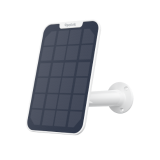
- Reliable Power Source: Check battery capacity, charge time, and anticipated runtime under local weather. In sunny areas, solar panels come in handy, whereas in shady areas, a plug-in adapter can be used.
- Stable Connectivity: A camera must have a clear view of the router or a mesh node. Check whether external antennas or Wi-Fi 6 are available in case the house walls prevent the signal.
- Storage Options: Choose local microSD cards, a network video recorder, or an encrypted cloud plan. Local media remain private, and cloud clips escape a break-in.
- Weather Resistance for Outdoor Use: Check the IP rating. An IP65 rating protects against rainfall, and the IP67 protects against temporary submersion. Dust and insects are also repelled by rugged housings.
- Video Quality: The higher the resolution the higher the finer details it captures, though it will occupy more storage space. The majority of the driveways are covered by a balanced 2K (1440p) or 4K stream, which will not choke a standard broadband connection.
- Night Vision: The cameras illuminate the room using irradiating light. Search the dark nighttime colors in case you have to read the color of clothing or vehicle paint during darkness.
- For Flexible Outdoor Monitoring: If you need a camera that can be installed without running power cables, a battery-powered wireless camera is often the easiest solution. For example, the Reolink Argus PT Ultra combines wire-free installation, 4K resolution, and solar charging support, making it well suited for driveways, backyards, and side entrances.
- For Remote Properties Without WiFi: If your property does not have internet access, a 4G camera may be the better choice. For example, the Reolink Go PT Ultra uses a cellular connection and can monitor farms, cabins, RVs, and construction sites without requiring WiFi.
- For Indoor Monitoring: If you want to check on pets, children, or deliveries inside the home, an indoor WiFi camera is often the most practical option. For example, the Reolink E1 Series provides pan-and-tilt monitoring and app access without requiring complex installation.
No. Reolink wireless cameras support local storage through microSD cards, Home Hubs, and Reolink NVRs. You can access recordings without paying monthly subscription fees, while cloud storage remains optional.


Be Prepared, Be Ahead
Never miss Reolink hot deals, news, and updates tailored for you.
Be Prepared, Be Ahead
Never miss Reolink hot deals, news, and updates tailored for you.

Google, Google Play, Google Assistant and related marks and logos are trademarks of Google LLC. Amazon, Alexa and all related logos are trademarks of Amazon.com, Inc. or its affiliates. Mac and Safari are trademarks of Apple Inc. App Store is a service mark of Apple Inc., registered in the U.S. and other countries. Firefox and the Firefox logo are trademarks of the Mozilla Foundation in the U.S. and other countries. Other product and company names mentioned herein may be trademarks of their respective companies.