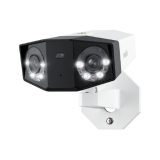
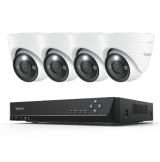
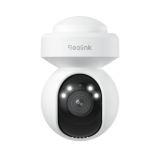
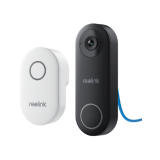
8 Camera Security System

Filter By

No Product Found

Up to 16MP Camera Support

Compatible Reolink systems support cameras up to 16MP, providing more image detail for areas where identifying people, vehicles, and other objects matters. Different camera resolutions can be selected according to the coverage and detail required in each location.

24/7 Continuous Recording

Compatible wired cameras can record continuously to a Reolink NVR, rather than capturing only motion-triggered events. Multiple camera feeds can be recorded and reviewed centrally, providing a more complete video history of the property.

PoE & Wi-Fi Camera Options

Choose PoE cameras for continuous power and stable data transmission through Ethernet, or compatible Wi-Fi cameras for locations where running network cables is less practical. This provides more flexibility when planning an 8-camera system across different parts of a property.

Expandable Local NVR Storage

Record footage locally to the NVR HDD without depending on cloud storage. HDD capacity and expansion limits vary by NVR model and hardware version, allowing users to choose storage based on the number of cameras, recording mode, and required retention period.

Smart Person, Vehicle & Animal Detection

Compatible Reolink cameras can distinguish people, vehicles, and animals from other motion. Smart alerts and event filtering help users focus on relevant activity and locate important recordings more efficiently.
Comparison Table

Feature Reolink 8-Camera Security System Other 8-Camera Security Systems
Camera Resolution Supports compatible cameras up to 16MP High-resolution options, commonly including 2K and 4K
Camera Connection PoE & Wi-Fi options Wired and/or wireless options depending on the system
Smart Detection Person, vehicle & animal detection on compatible cameras Person and vehicle detection commonly available
Recording 24/7, motion-triggered & scheduled recording on compatible systems 24/7 and motion-triggered recording commonly available
Local Storage Expandable NVR HDD storage for centralised recording NVR/DVR HDD, local or cloud storage depending on the system
Subscription No subscription required for local recording and core supported smart detection Subscription requirements depend on storage and advanced features

What Is an 8 Camera Security System?

An 8-camera security system includes eight cameras connected to a single recording device, allowing you to monitor, record, and review multiple areas at once. It’s a complete solution for homes or businesses that need wide coverage.

- Cameras: An 8-camera system includes eight cameras placed in different key locations such as entrances, driveways, backyards, or office spaces. Each camera records its own area continuously or when motion is detected, ensuring full coverage of the property from multiple angles.

- Main Recording Device (NVR or DVR): All cameras connect to one central recording device, either a Network Video Recorder (NVR) or a Digital Video Recorder (DVR). This unit stores all footage in one place and manages every camera feed, making it easy to organize and access recordings.

- Central Control (All-in-One Management): The system is controlled through a central interface that lets you manage all eight cameras in one place. You can adjust settings, view live feeds, and access recordings without switching between devices. This unified control makes security monitoring simpler and more efficient.

- All-in-one App: If you have a Reolink RLK16-800B8 kit, you can view all camera feeds live on a single screen using a monitor connected to the system. In addition, an all-in-one mobile app or desktop platform allows remote access, so you can check live video from anywhere at any time.

What Are Different Types of 8-Camera Security Systems?

When setting up an 8-camera system, the main difference is how cameras are powered, connected, and how video is stored.

- PoE (Power over Ethernet) Wired Systems: The most reliable option. Each camera connects to an NVR using one Ethernet cable that provides both power and video, ensuring stable 24/7 recording with minimal lag.

- Wi-Fi NVR Systems: Cameras send video wirelessly to an NVR, reducing cable installation. However, each camera still needs a nearby power outlet for continuous operation.

How to Install 8-Channel PoE Security Camera Systems?

Installing an 8-channel PoE security camera system involves connecting cameras and a network video recorder (NVR) through Power over Ethernet for both power and data transmission.

1. Plan Camera Locations: Choose key areas like entrances, driveway, and backyard for full coverage.

2. Mount Cameras: Install each camera securely at elevated positions for better viewing angles.

3. Run Ethernet Cables: Use Cat5e/Cat6 cables to connect each camera back to the NVR or PoE switch.

4. Connect to NVR: Plug all cameras into PoE ports on the NVR for power and data transmission.

5. Connect to Monitor & Network: Link the NVR to a monitor via HDMI and to your router for remote access.

6. Power On & Set Up: Turn on the system, let cameras auto-detect, then configure settings in the app or NVR.

What Are the Differences between 4-Channel and 8-Channel Security System?

A 4-channel and an 8-channel security system mainly differ in the number of cameras they support, which directly affects coverage, scalability, and use cases.

- Number of Cameras Supported: A 4-channel security system supports up to four cameras, while an 8-channel system supports up to eight cameras. This means an 8-channel system can cover twice as many areas as a 4-channel setup.

- Coverage Area: A 4-channel system is suitable for smaller properties such as apartments, small homes, or limited entry points. An 8-channel system is better for larger homes, multi-entry properties, or small businesses that require wider surveillance coverage.

- Scalability and Expansion: A 4-channel system has limited expansion capacity and may require replacement if more cameras are needed. An 8-channel system offers greater flexibility, allowing users to expand their security setup without changing the entire system.

- Use Case: A 4-channel system is typically used for basic monitoring needs such as front door, backyard, and garage coverage. An 8-channel system is more suitable for full-property surveillance, including multiple indoor and outdoor zones.

- Cost and System Complexity: A 4-channel system is generally more affordable and easier to install. An 8-channel system is more expensive but offers more advanced coverage and long-term flexibility.

How Much Does a Full Set of 8 CCTV Cameras Cost?

A full Reolink 8-camera CCTV system in Australia generally costs around A$1,000–A$2,000+ for the equipment, depending on the camera resolution, NVR, storage capacity, and included features.

A complete system typically includes cameras, an NVR with HDD storage, network cables, and mounting accessories. Higher-resolution cameras, larger HDD capacity, optical zoom, PTZ, or other advanced features can increase the overall system price.

How Much Does It Cost to Install an 8 Camera Security System?

DIY Wireless Systems: A$300–A$800 for equipment, with no professional installation costs.

Standard Wired / PoE Systems: A$2,000–A$3,500 for a typical residential setup, including cameras, an NVR, storage, cabling, and professional installation.

High-End or Commercial Systems: A$3,500–A$7,000+ for larger properties, complex cable routing, higher-resolution cameras, additional storage, or more advanced installation requirements.